Header Navigation:

Faculty & Staff

Office Hours

  • Wed: 2:00-4:00
Content Banner

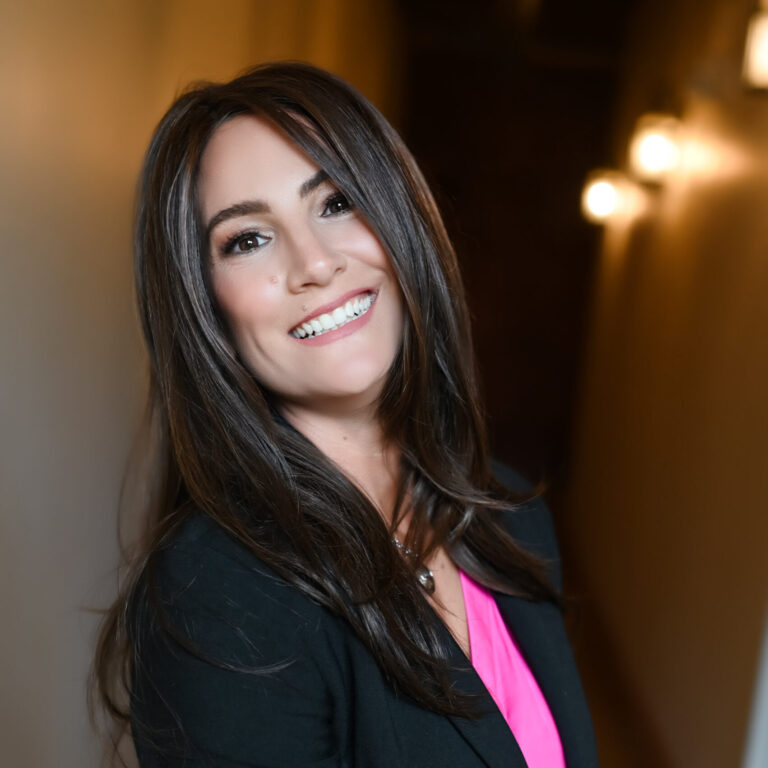
Dr. Carolyn Rae Miller

Picture of Dr. Carolyn Rae Miller

Named Professor

Biography

Carolyn R. Miller is SAS Institute Distinguished Professor of Rhetoric and Technical Communication.  She was Visiting Associate Professor at Michigan Tech and Penn State in 1988, Visiting Professor at Georgia Tech in 1991, and Visiting Professor at the Federal University of Pernambuco in Brazil in 2007.

Carolyn is the founding director of NC State's Ph.D. in Communication, Rhetoric, and Digital Media, established in 2005, and of the M.S. in Technical Communication, started in 1988; she also proposed and taught the first graduate courses for the M.A. option in Rhetoric and Composition, begun in 1984. She served as Director of Professional Writing in 1993–2002 and 2003–2004. She established and directed the Center for Communication in Science, Technology, and Management from 1995 to 1999 and co-directed its successor, the Center for Information Society Studies, from 1999 to 2003.

Carolyn's professional service includes terms on the governing boards of the American Society for the History of Rhetoric, the Association of Teachers of Technical Writing, the Conference on College Composition and Communication, the MLA Division on the History and Theory of Rhetoric and Composition, and the Rhetoric Society of America. She is a past president of the Rhetoric Society of America and was editor of Rhetoric Society Quarterly 2008–11. She has previously served on the editorial boards of College Composition and Communication, Journal of Business and Technical Communication, Philosophy and Rhetoric, Quarterly Journal of Speech, Rhetoric Society Quarterly, and Written Communication.

See profile on Academia.edu.

Interests

Digital rhetoric • Genre studies • Rhetorical theory • Rhetoric of science and technology • Technical and professional writing

Carolyn's current research focuses on genres of action and interaction in new media, such as blogs, webinars, scientific publication, and the many genres of videogames. How do conventions of stability such as genres emerge and develop in an environment of constant turbulence such as the internet? Can historical examples of genre change in traditional media such as film and print inform our understanding of new media? Answers to questions like these may help us better understand and manage the capacities of the new digital media.

Honors

Fellow of the Rhetoric Society of America, 2010 • Rigo Award for lifetime contributions to the field of communication design, ACM SIGDOC, 2006 • NC State Alumni Distinguished Graduate Professor, 1999 • Fellow of the Association of Teachers of Technical Writing, 1995 • NEH Fellowship, 1993–94 • NC State University Academy of Outstanding Teachers, 1984 • Publication awards from the National Council of Teachers of English, 1981, 1984, 1999

Publications

Recent publications

“Should We Name the Tools? Concealing and Revealing the Art of Rhetoric.” The Public Work of Rhetoric: Citizen-Scholars and Civic Engagement, ed. David Coogan and John Ackerman. University of South Carolina Press, 2010. 19–38.

“Questions for Genre Theory from the Blogosphere,” first author, with Dawn Shepherd. Genres in the Internet: Issues in the Theory of Genre, ed. Janet Giltrow and Dieter Stein. Amsterdam: John Benjamins, 2009. 263–290.

“Rhetoric, Disciplinarity, and Fields of Knowledge,” second author, with John Lyne. The Sage Handbook of Rhetorical Studies, ed. Andrea A. Lunsford. Los Angeles: Sage, 2009. 167–174.

“What Can Automation Tell Us About Agency?” Rhetoric Society Quarterly 37:2 (2007): 137–157.

“Audience, Persuasion, Argument,” first author, with Davida Charney, Handbook of Research on Writing: History, Society, School, Individual, Text, ed. Charles Bazerman. Mahway, NJ: Lawrence Erlbaum, 2007. 583–598.

“Novelty and Heresy in the Debate on Nonthermal Effects of Electromagnetic Fields.” Rhetoric and Incommensurability. Ed. Randy Allen Harris. West Lafayette, IN: Parlor Press, 2005. 464–505.

“Expertise and Agency: Transformations of Ethos in Human-Computer Interaction.” The Ethos of Rhetoric. Ed. Michael Hyde. University of South Carolina Press, 2004. 197–218.

“Blogging as Social Action: A Genre Analysis of the Weblog, first author, with Dawn Shepherd. Into the Blogosphere: Rhetoric, Community, and Culture of Weblogs, ed. Laura Gurak, Smiljana Antonijevic, Laurie Johnson, Clancy Ratliff, and Jessica Reyman. University of Minnesota Libraries, 2004. 

“The Presumptions of Expertise: The Role of Ethos in Risk Analysis.” Configurations 11 (2003): 163–202.

Education

  • Ph.D. in Communication and Rhetoric from Rensselaer Polytechnic Institute, 1980
  • M.A. in English from Penn State University, 1968
  • B. A. in English from Penn State University, 1967