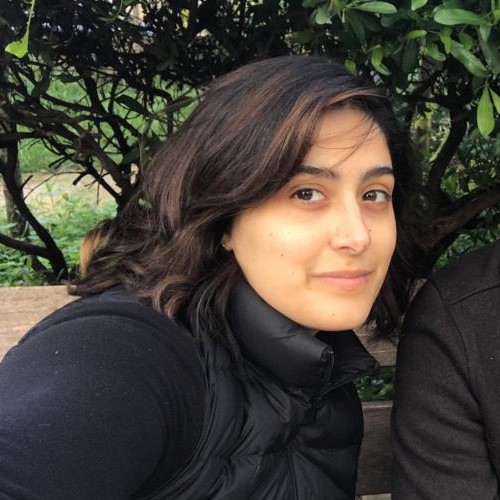
Since joining the film studies faculty in 2002, Marsha Gordon has taught courses on the Educational Film, American War Film, Women & Film, 1950s American Film, Studio Era Hollywood, Warner Bros. in the Golden Age, The Musical, History of Film to 1940, African American Film, International Crime Film, Introduction to Film, and Film & Literature. Her research interests include stardom and movie fan culture through the studio era; the birth and decline of the Hollywood studio system; Sam Fuller, Ida Lupino, and other independent filmmakers of the 1940s and 1950s; orphan films, especially of the educational variety; and the intersections between film and other art forms, such as literature.
In Progress: Organized Insanity: Sam Fuller’s Hot/Cold War Films. Currently researching/writing.
Articles in Academic Journals/Books
Published:
“Multi-Purposing Early Cinema: A Psychological Experiment Involving Van Bibber’s Experiment (Thomas Edison, 1911).” Beyond the Screen: Institutions, Networks and Publics of Early Cinema, edited by Marta Braun, Charlie Keil, Rob King, Paul Moore, and Louis Pelletier. UK: John Libbey Press, 2012. 153-160.
“GI’s Documenting Genocide: Amateur Films of WWII Concentration Camps.” Film and Genocide, edited by Tomas Crowder and Kristi Wilson. University of Wisconsin Press, 2012. 170-186.
“A History of Learning with the Lights Off.” Co-written with Dan Streible and Devin Orgeron. Learning With the Lights Off: Educational Film in the United States. Co-edited with Dan Streible and Devin Orgeron. Oxford University Press, 2012. 15-66.
“‘A Decent and Orderly Society’: Race Relations in Riot-Era Educational Films, 1966-1970.” Learning With the Lights Off: Educational Film in the United States. Co-edited with Dan Streible and Devin Orgeron. Oxford University Press, 2012. 424-441.
“‘You are Invited to Participate’: Interactive Fandom in the Age of the Movie Magazine.” Journal of Film and Video. Volume 61, No. 3 (Fall 2009): 3-23.
“The History of Media Celebrity.” Ed. Robert Kolker. The Oxford Handbook of Film and Media Studies. New York: Oxford University Press, August 2008. 187-223.
“Megatronic Memories: Errol Morris and the Aesthetics of Observation.” Co-written with Devin Orgeron. The Image and the Witness. Eds. Frances Guerin and Roger Hallas. London: Wallflower Press, 2007. 238-252.
“Familial Pursuits, Editorial Acts: Documentaries After the Age of Home Video.” Co-written with Devin Orgeron. The Velvet Light Trap. Issue #60 (fall 2007): 47-62.
“‘The Most Profound Shock’: Traces of The Holocaust in Sam Fuller’s Verboten! and The Big Red One.” The Historical Journal of Radio Film and Television. 27.4 (October 2007): 471-496.
“‘Something Different In Science Films’: The Moody Institute of Science and the Canned Missionary Movement.” Co-written with Skip Elsheimer. The Moving Image. 7.1 (spring 2007): 1-26.
“Liberating Images?: Sam Fuller’s Film of Falkenau Concentration Camp.” Film Quarterly. 60.2 (winter 2006): 38-47.
“Making It in Hollywood: Clara Bow, Fandom, and Consumer Culture.” Cinema Journal. 42.4 (Summer 2003): 76-97.
“Rethinking Authorship: Jack London and the Motion Picture Industry.” American Literature. 75.1 (March 2003): 91-117.
"Eating Their Words: Consuming Class a la Keaton and Chaplin." With Devin Orgeron. Special issue of College Literature (January 2001): 84-104.
“‘What Makes a Girl Who Looks Like That Get Mixed Up In Science?’: Gender in Sam Fuller’s Films of the 1950s.” Quarterly Review of Film & Video. 17.1 (2000): 1-17.
"Onward Kitchen Soldiers: Mobilizing the Domestic During WWI." The Canadian Review of American Studies. 29.2 (1999): 61-87.